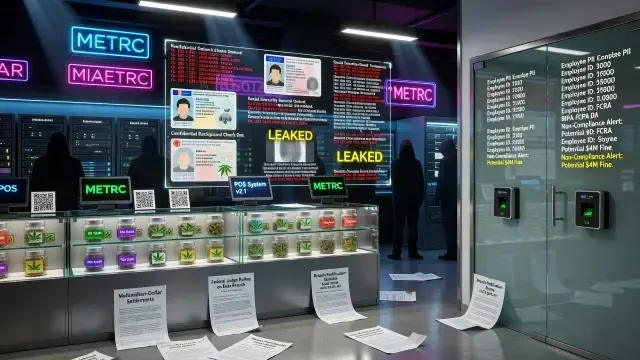
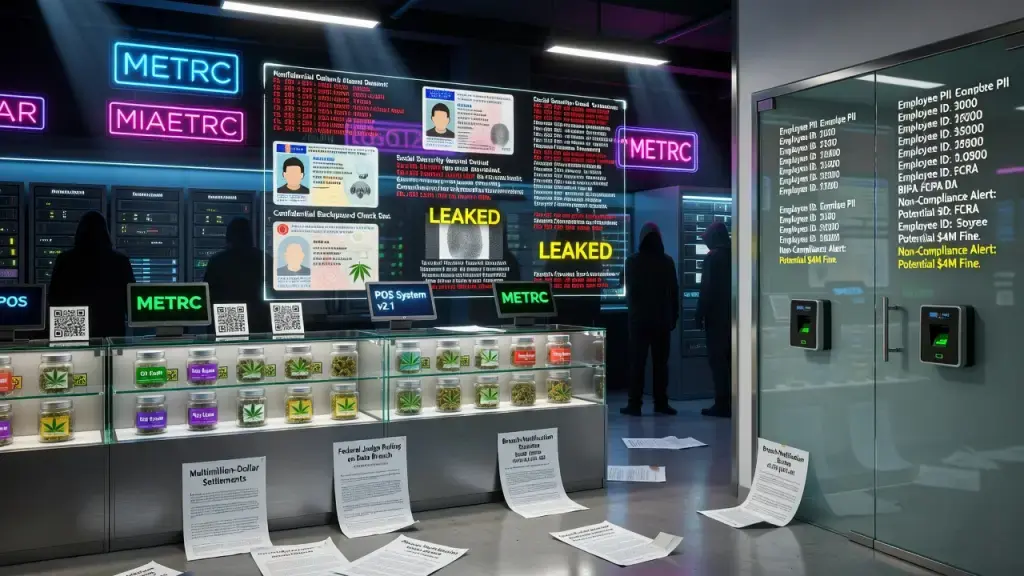
Three separate legal developments from September 2026 point to the same uncomfortable truth: cannabis operators collect some of the most sensitive personal data in any regulated retail industry, yet many protect it far less rigorously than the product on their shelves. A federal judge let a major data-breach case proceed past the pleading stage, a well-known brand agreed to a multimillion-dollar settlement over a vendor breach, and an identity-verification company used at dispensaries nationwide confirmed unauthorized access to customer records. None of these companies set out to fail their patients. That's precisely the point.
Compliance Built the Vault, But Not the Lock
Seed-to-sale tracking, badge systems, visitor logs, surveillance retention requirements - state cannabis regulation is thorough almost to a fault on the question of where the plant goes. METRC and its state equivalents exist to stop diversion, not to protect personal information. Along the way, though, regulators required operators to collect driver's licenses, physician certifications, fingerprints, background-check files, and medical registrations. The rules that demand this collection say comparatively little about encryption standards, access controls, or vendor oversight. Operators end up holding pharmacy-grade data behind retail-grade security, and the gap between those two realities is exactly where litigation now lives.
Vendors Create Exposure Operators Still Own
In two of the three situations driving this conversation, the breach originated with a third-party vendor, not the dispensary or cannabis company itself. That distinction means little to a court or to a customer whose Social Security number surfaced on a dark-web marketplace. State breach-notification statutes generally place the notification duty on whoever owns or licenses the data, and depending on contract language, that can mean the retailer, not the point-of-sale processor or ID-scanning vendor, is on the hook. Operators relying on third-party verification tools, loyalty platforms, or POS systems should know, in writing, who bears that obligation before an incident forces the question.
- Confirm which party has contractual notification duties when a vendor is breached
- Preserve vendor communications and incident timelines from the outset
- Audit what verification or POS vendors actually store, and for how long
- Maintain an incident response plan that assumes litigation moves faster than vendor disclosure
Employee Records Carry the Same Risk, With Less Attention
Patient data gets the headlines, but employee files sit in the same filing cabinets, so to speak. Badged cannabis workers go through fingerprinting and background checks mandated by state licensing bodies, which triggers obligations under the Fair Credit Reporting Act around how those reports are obtained, used, and destroyed. Biometric timeclocks common in cultivation and processing facilities raise separate exposure under laws like Illinois' Biometric Information Privacy Act. And medical documentation gathered during ADA accommodation requests must be stored separately and kept confidential - a requirement that has nothing to do with hackers and everything to do with basic file management. A breach of a badging system can expose the same fingerprints and Social Security numbers as a breach of a patient database. Federal courts have also made clear that cannabis's unsettled federal status doesn't excuse employers from federal labor law; the Tenth Circuit said as much when it rejected the argument that violating the Controlled Substances Act somehow exempts a cannabis employer from the Fair Labor Standards Act.
Rescheduling Changes the Diligence Conversation, Not the Risk Itself
Cannabis moving from Schedule I to Schedule III addresses the 280E tax burden and may ease some federal friction over time, but it does nothing to patch a database with no password. If anything, rescheduling raises the stakes. Lenders, insurers, and potential acquirers who once stopped evaluating a deal the moment they heard the word "cannabis" now have more reason to look closely at how a company runs its operations - and data governance is squarely part of that review. An operator that can show encrypted storage, documented vendor oversight, and a tested incident response plan tells a very different story than one still explaining an exposed database years after the fact. In an industry built on proving control over every gram, proving control over every record is the logical next step.