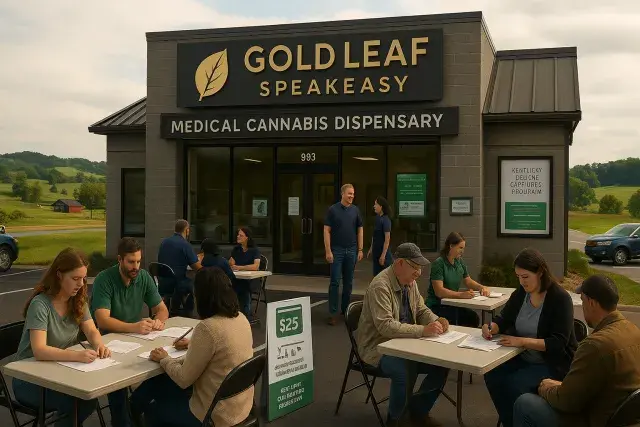
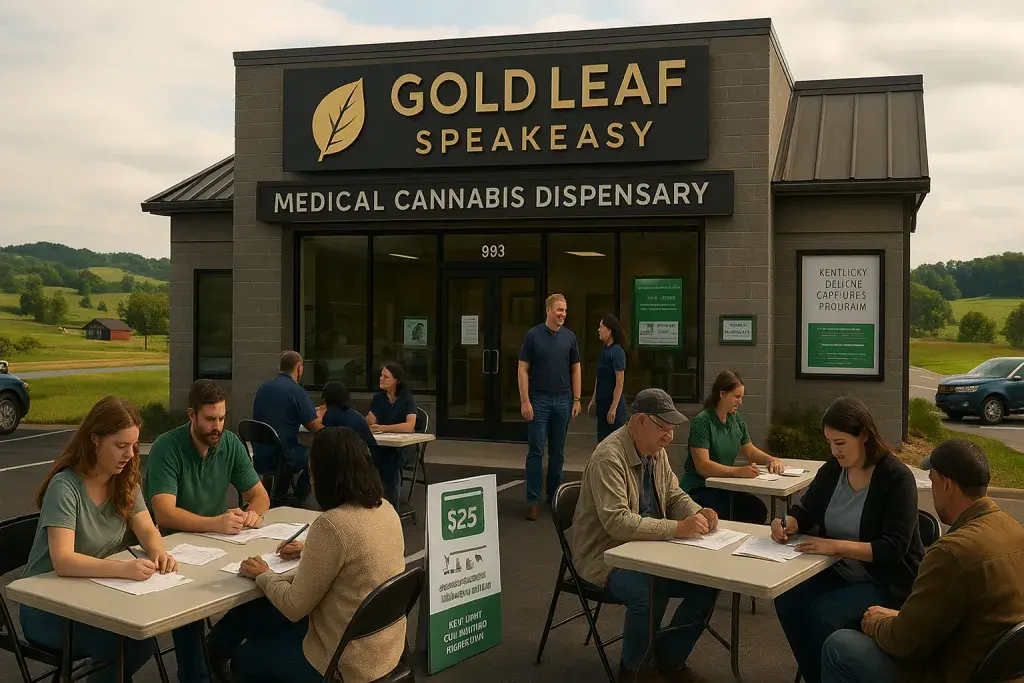
Gold Leaf Management has opened a new Speakeasy dispensary at 993 US-27 in Stanford, Kentucky, extending the company's medical cannabis footprint into a market that had been underserved by existing licensed retail locations. The store adds another access point for patients enrolled in Kentucky's medical cannabis program, which remains in its early operational phase and continues adding product categories and retail infrastructure as the state builds out its regulatory framework.
What's notable here isn't just the storefront. Operators entering new markets face the same back-end questions regardless of state: how inventory gets tracked from cultivator to counter, how compliance logs get maintained, and how transactions get processed in an industry still largely locked out of traditional banking. Point-of-sale infrastructure matters as much as shelf space in a market this young, and the operational lessons aren't unique to Kentucky. Other regulated markets have already worked through similar growing pains - Alaska cannabis POS systems, for instance, had to adapt early to seed-to-sale tracking requirements and cash-heavy transaction environments, offering a preview of the compliance architecture Kentucky retailers will need to master as their own program scales. Alaska cannabis POS
A Patient Drive as Market-Entry Strategy
The Stanford location is pairing its opening with a low-cost certification event, run in partnership with the Kentucky Cannabis Industry Association, that lets patients complete evaluation, notary services and state application assistance in a single visit. New certifications and renewals are priced at $25, with an additional $25 state application fee submitted separately through Kentucky's medical cannabis portal.
This is a practical response to a real access problem. Medical cannabis programs live or die on enrollment friction - if getting certified requires multiple appointments across multiple providers, patients drop out before they ever reach a dispensary counter. Bundling evaluation and paperwork into one appointment reduces that friction, and it's a tactic likely to get copied by other operators as Kentucky's patient base grows. For dispensary operators watching from other markets, it's a reminder that patient acquisition costs in medical programs are often won or lost before a sale ever happens.
What Rural Expansion Signals for Kentucky's Program
Gold Leaf CEO Casey Flippo framed the Stanford opening around proximity - giving patients an option closer to home rather than requiring long drives to reach licensed retail. That's a real operational consideration in a state where medical cannabis retail is still thin on the ground relative to population. Store placement in emerging medical markets tends to follow population centers first; rural build-out comes later, once operators have enough volume data to justify the lease and staffing costs.
For multi-state operators and prospective licensees watching Kentucky, the Stanford location is a data point on how quickly retail density can grow outside metro corridors. It also raises the usual questions that come with any expanding medical program: adequate staff training on product education, consistent lab testing and COA availability across expanding SKU counts, and compliant packaging that meets state labeling rules as flower, vapes, edibles and concentrates move through a still-developing supply chain.
The Compliance Backdrop Operators Can't Ignore
- Age and patient-status verification remain required at every point of sale under Kentucky's medical program.
- Product categories are expanding gradually, meaning wholesale menus and inventory mixes will shift as cultivators and processors scale output.
- Cash-heavy transaction environments persist industry-wide due to federal banking restrictions, making point-of-sale and compliance software choices consequential rather than incidental.
None of this makes cannabis retail simple, and no dispensary opening changes that. What Stanford's launch does show is an operator treating patient access and regulatory compliance as connected problems rather than separate line items - a distinction that tends to separate durable retail operations from ones that struggle once initial novelty fades.