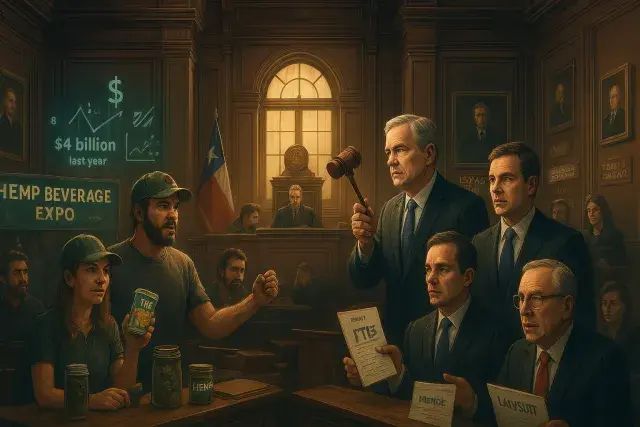

The Hemp Beverage Expo kicked off its recent gathering with a clip from Animal House - specifically Bluto's defiant "It ain't over!" speech - and the symbolism wasn't subtle. Hemp entrepreneurs operating in the THC products space are staring down a coordinated push by licensed medical marijuana operators and politically connected regulators to shut them out of a market they helped build. What's unfolding in Texas, and increasingly at the federal level, is a direct collision between two competing visions of who gets to sell products containing THC: state-licensed dispensaries with expensive vertically integrated operations, or the scrappier hemp-derived product companies that moved quickly after federal hemp legalization in 2018.
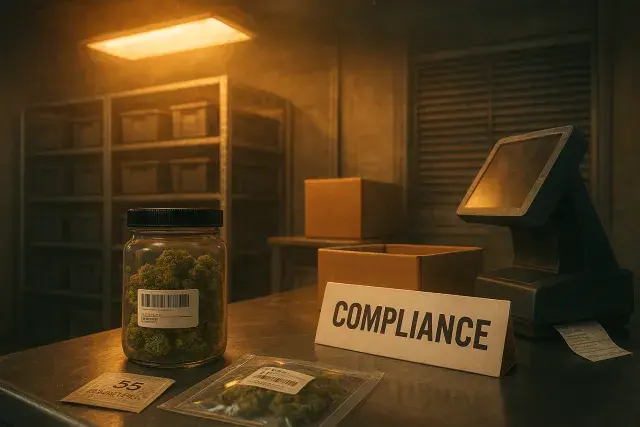
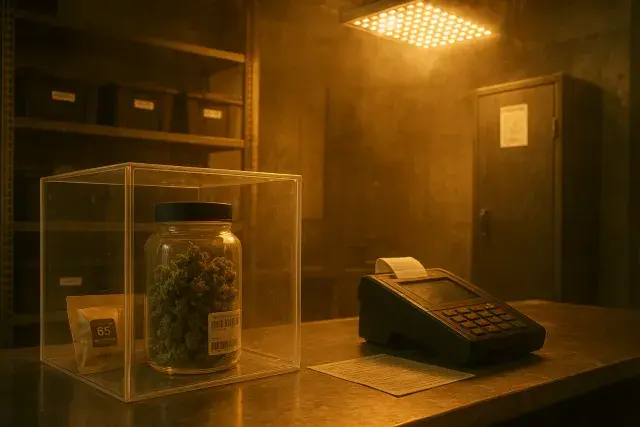
The business stakes are significant. Texans spent roughly $4 billion last year on hemp-derived THC products - gummies, beverages, smokable flower, pre-rolls, and concentrated resin products. That's a mature, functioning consumer market, and dispensary operators, compliance vendors, and point-of-sale software providers all have an interest in understanding where regulation lands. For any operator tracking product categories across retail channels, it's worth knowing how today's compliant dispensary technology handles evolving SKU classifications and regulatory shifts - see how it works - because the compliance architecture that supports licensed cannabis retail will matter enormously if THC beverages and hemp products get folded into a regulated adult-use framework.
The Regulatory Squeeze: How Texas Got Here
Texas Lt. Gov. Dan Patrick agreed to legalize hemp in 2019 after being assured THC concentrations were too low for intoxicating effects. That assurance aged poorly. Within five years, entrepreneurs were selling hemp-derived THC products that were, functionally, indistinguishable from what licensed dispensaries under the Texas Compassionate Use Program were selling - except without the licensing overhead, compliance costs, or per-gram pricing that TCUP operators carry.
That's the thing about a market gap: someone fills it. And the companies that spent heavily to acquire medical marijuana licenses found their wholesale pricing undercut and their consumer base eroding. Patrick pushed legislation to ban hemp THC products outright. Gov. Greg Abbott vetoed it - then directed the Texas Department of State Health Services to regulate rather than ban. In practice, though, DSHS went further than Abbott's stated preference. Instead of an alcohol-style regulatory model, the agency restricted any hemp product with enough THC to produce a physiological effect. That essentially bans the product category by definition rather than by dose threshold. Hemp operators sued, and the case is scheduled for trial.
A Licensing Process Under Scrutiny
Meanwhile, the Texas Compassionate Use Program is expanding. The Legislature authorized more licenses and broadened qualifying conditions - chronic pain now qualifies, accessible through telemedicine clinics. In practical terms, the patient population eligible for a TCUP prescription has grown substantially. That's good news for licensed dispensaries adding patients, but it also reinforces the central irony: the same political actors pushing hardest against hemp THC are simultaneously loosening access to licensed medical THC.
The licensing process itself has drawn criticism. The Texas Department of Public Safety, which issues TCUP licenses, reportedly made a mathematical scoring error in an earlier round and had to recalculate applicant scores. More recently, the Texas Hemp Reporter identified two conditionally selected applicants currently carrying IRS tax liabilities that exceed their cash on hand. A third company, PharmaCann, has reportedly defaulted on leases and announced significant layoffs. For local businesses that applied and were passed over, these findings raise serious questions about how DPS weighs financial responsibility in its vetting process - which is supposed to be a core screening criterion. Multistate operators with complicated balance sheets aren't automatically better operators than local applicants with clean books.
The Beverage Category and the Federal Picture
At the federal level, Sen. Mitch McConnell's farm bill language imposes a ban on intoxicating hemp products effective November 12. That provision is already prompting legal challenges and lobbying pressure from multiple directions. The Hemp Beverage Expo drew Washington lobbyists who see THC beverages as the most politically viable path to some form of federal legitimacy - partly because the alcohol distribution channel is interested. Alcohol wholesalers, who already operate the three-tier compliance infrastructure used for beer and spirits, see hemp THC beverages as a natural adjacency. The National Restaurant Association has also publicly supported the category.
Diana Eberlein, chair of the Coalition of Adult Beverage Alternatives, said at the expo that the category has staying power regardless of the current regulatory turbulence. The question, as she framed it, is mechanism and timing - not whether the category survives. That's a reasonable read of the commercial momentum. Prohibition of a product with billions in annual consumer spending and organized business lobbying behind it is a difficult thing to sustain, particularly when neighboring states like Oklahoma and New Mexico offer legal access with minimal travel.
What Operators and Investors Should Watch
For dispensary operators, compliance officers, and investors, a few operational realities are worth tracking closely:
- If THC beverages eventually enter an alcohol-style regulatory model, existing licensed dispensaries may face new competitive pressure from bars, restaurants, and grocery retail - channels that don't currently carry cannabis products.
- The outcome of the Texas DSHS lawsuit, set for trial in late July, will determine whether hemp THC products can legally remain on shelves in the state's largest metro markets while the Legislature is out of session.
- TCUP expansion broadens the licensed dispensary patient base, but it also signals that the line between medical and adult-use is getting thinner by statute - not just by market behavior.
- DPS licensing decisions for new TCUP operators, given the reported financial vetting failures, may face legal challenges from rejected applicants, which could delay market entry and complicate investor timelines.
The broader dynamic here is a market sorting itself out under conditions of regulatory inconsistency. Hemp entrepreneurs built consumer demand. Licensed operators built compliance infrastructure. Neither side has the full answer. An alcohol-style framework - age verification, potency labeling, licensed retail channels, excise tax collection - would borrow from both. Whether Texas arrives there through the courts, the next legislative session, or federal preemption is genuinely unclear. Patrick has said shutting down smoke shops remains a priority. Abbott has endorsed regulation over prohibition. That gap isn't closing quietly.