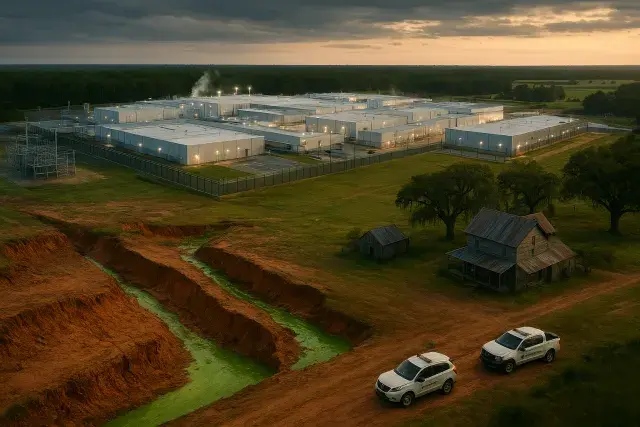
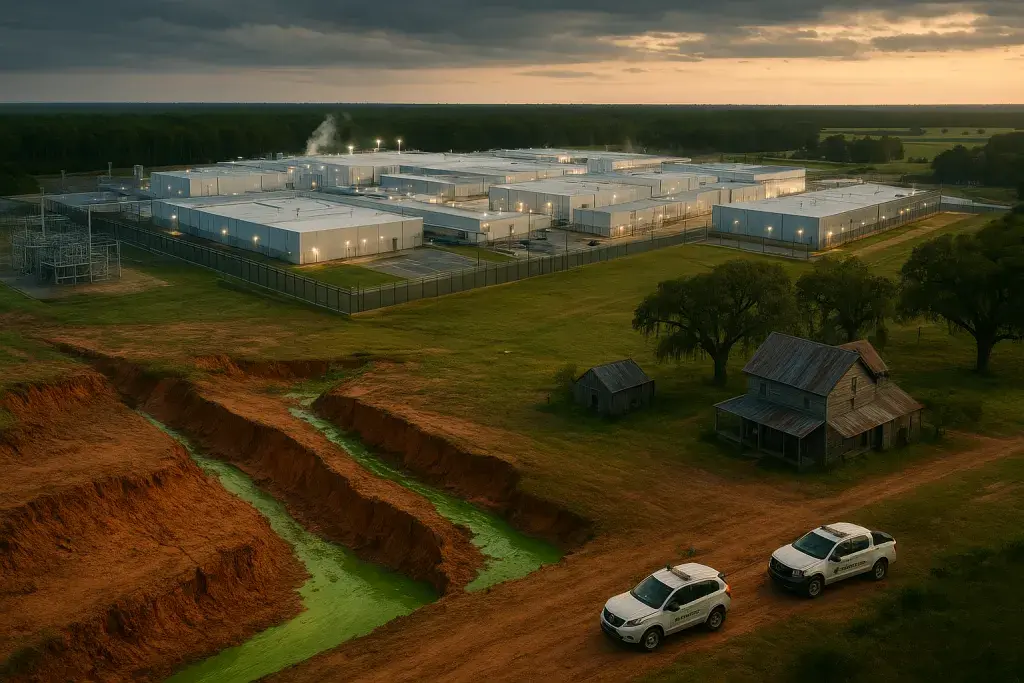
Trulieve, one of the largest vertically integrated cannabis operators in the United States and the first American marijuana company listed on the New York Stock Exchange, is facing pointed criticism not from short sellers or regulators questioning its financials - but from the family farm next door. A multi-generational landowner in Jefferson County, a rural community in North Florida, has gone public with complaints of erosion damage, algae-laden stormwater runoff, chronic noise, and persistent odor originating from Trulieve's more than one-million-square-foot cultivation campus, which the company reportedly calls "Megatron." State environmental regulators, including the Suwannee River Management District and the Florida Department of Environmental Protection, are now involved.
The situation exposes a pressure point that vertically integrated multi-state operators frequently underestimate: the cost of community relations in rural markets. Large-scale cannabis cultivation facilities carry a very different compliance footprint than a retail dispensary in an urban strip mall. Where a licensed retailer might manage its regulatory obligations through IndicaOnline cannabis POS systems, METRC integrations, and seed-to-sale tracking, a cultivation campus of this size generates real-world impacts - stormwater, odor, light, sound - that no software platform resolves. Those impacts fall on actual neighbors. In Jefferson County, those neighbors have been on the same land for nearly 200 years.
When Vertical Integration Meets Rural Zoning
Trulieve's Jefferson County facility is, by any measure, an industrial operation. Eleven buildings. A dedicated electric substation. Round-the-clock activity. The affected landowner describes erosion cuts a quarter-mile long, nearly six feet deep, and up to twenty feet wide - damage consistent with inadequately managed stormwater discharge from a large impervious surface. The fluorescent green algae reportedly carried in that runoff raises the kind of water-quality flags that environmental agencies take seriously, particularly in watersheds that feed into ecologically sensitive systems like the St. Marks River.
Here's the thing: cannabis operators seeking cultivation licenses typically must satisfy local zoning boards, state health and environmental agencies, and licensing authorities before breaking ground. Florida's medical marijuana program imposes strict licensing requirements on operators, including cultivation standards. But the gap between license approval and long-term operational compliance is real. What a facility looks like on paper in a license application and what it generates day-to-day across years of full-scale production can be very different things. Odor management, stormwater controls, noise abatement - these are engineering and operational disciplines, not checkbox items. Large operators with investor relations obligations and public listings don't always prioritize them with the same urgency they bring to earnings calls.
The Cease-and-Desist Problem
What sharpened community frustration here wasn't just the physical impacts - it was Trulieve's response. When the affected landowner mounted a private camera to document water flowing onto their property, the company's legal team reportedly responded with a cease-and-desist letter demanding the camera be removed. That camera, by the landowner's account, barely captured Trulieve's property over an eight-foot wall the company had constructed. Rather than opening a dialogue, the company reached for litigation tools.
That is a reputational calculation worth examining. Cannabis operators - especially publicly traded ones - operate in a regulatory environment where community support functions as informal political capital. License renewals, local ordinance changes, zoning variances, and state legislative sessions all create moments where community goodwill either opens doors or closes them. A company that responds to a neighbor's documentation camera with legal threats rather than a conversation has miscalculated. It signals a gap between the public-company narrative of responsible cannabis business and the lived experience of the communities hosting those facilities. Investors paying attention to ESG risk profiles should notice.
What Operators Can Learn From This
Multi-state operators and single-state licensees alike are expanding cultivation infrastructure as state-legal markets mature. The economics push toward consolidation and scale - larger facilities, lower per-unit production costs, better margins in a compressed wholesale pricing environment. That logic is sound from a supply chain standpoint. But scale introduces exposure that smaller operations don't face.
A few operational realities that this situation makes plain:
- Stormwater management is an engineering obligation, not an afterthought. Large impervious surfaces on cultivation campuses must be engineered to contain runoff on-site, particularly in states with active water management districts and environmentally sensitive watersheds.
- Odor control at scale requires active mechanical systems and ongoing monitoring - not just at commissioning but throughout operations, as building seals age and HVAC loads shift.
- Community relations is a compliance function. Operators who treat it as a PR exercise tend to find out the hard way that environmental and zoning complaints can trigger regulatory reviews that are far more expensive than proactive remediation.
- Litigation posture toward neighbors almost always backfires in rural markets, where political relationships are personal and long-term.
The Jefferson County case is now in regulators' hands. That's a worse outcome for Trulieve than a resolved neighbor dispute would have been - and a useful data point for any operator planning a large-scale cultivation build in a rural community. Wall Street and Main Street are not separate audiences. In the cannabis business, they have a way of finding each other.