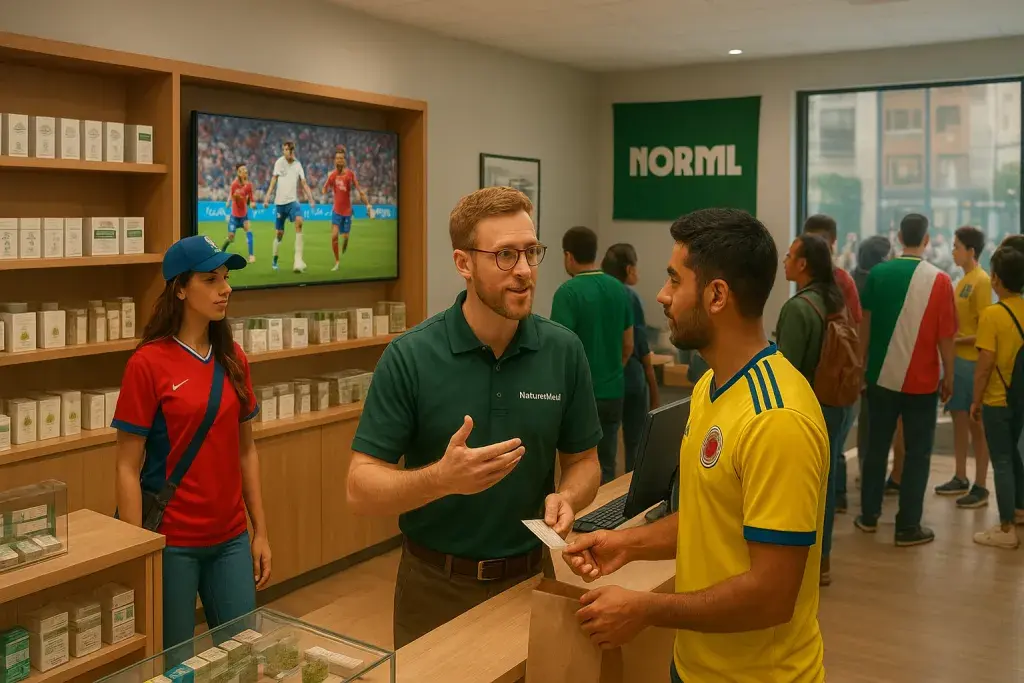
For the first time in the history of the FIFA World Cup, millions of international visitors are arriving in host cities where they can legally walk into a licensed dispensary. That is not a small thing. With host cities spread across the United States, Canada, and Mexico - where cannabis is legal or decriminalized in some form in every location - the event has become an unplanned stress test for regulated retail, and a rare window into how legal cannabis presents itself to a global audience.
Adult-use cannabis retail is accessible in eight of the 16 host cities. Medical access is legal in five more. Even in Mexico, where no dispensary infrastructure exists, adult-use possession is decriminalized and medical cannabis is legal. For operators tracking market expansion and regulatory momentum - including those watching emerging frameworks like the one detailed at https://indicaonline.com/markets/minnesota/ - the demographic exposure this event generates is worth paying attention to well beyond the immediate sales cycle. Retailers in cities including Los Angeles, Kansas City, and Manhattan have reported measurable upticks in first-time customers, including international visitors who have never encountered legal cannabis retail in any form.
What Retailers Are Actually Seeing on the Floor
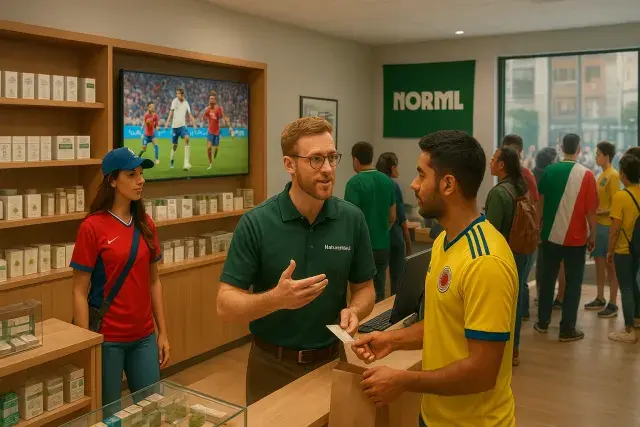
The short-term commercial picture is real, if uneven. At NatureMed's Kansas City locations - where multiple international squads have established base operations nearby - head of marketing Myles Mayfield said a consistent bump in first-time customers has been visible since the event began. Manhattan's Alta Dispensary, situated in Nolita within commuting distance of the final venue in New Jersey, is seeing similar patterns. At The Artist Tree's Koreatown location in Los Angeles, foot traffic surged around specific fixture days, driven largely by locals rather than tourists - a reminder that events like this activate existing customers as much as they attract new ones.
None of this is a permanent revenue shift. First-time international customers are not going to anchor annual sales projections. But what they represent operationally is a real demand spike on trained floor staff - particularly around education. Chris Kuilan, co-founder of Stoops NYC, made a deliberate effort to ensure staff were prepared to walk brand-new customers through the basics: ID verification, product testing standards, labeling requirements, and compliant packaging. Anesha Jones, general manager at Alta, described extended conversations about THC potency, dosing, and legal consumption locations. That is not standard budroom traffic. It requires a different kind of staff preparation, and operators who didn't anticipate it may have found their teams underprepared.
The potency gap is worth underscoring here. Many international visitors are arriving from markets where cannabis, if consumed at all, comes through illicit channels with no standardized testing or labeling. Legal adult-use products - particularly edibles - can carry significantly higher THC concentrations than what those consumers may have previously encountered. Responsible retailing means flagging that clearly, and dispensaries that prioritize consumer safety education during high-traffic events are doing exactly what regulated markets are supposed to do.
The Bigger Value May Be Political, Not Commercial
Here is the thing about a global event of this scale: the commercial lift is visible, but the regulatory and political ripple effects are harder to measure and potentially far more durable. Most international visitors are arriving from countries where cannabis remains fully prohibited - including some with among the strictest drug enforcement regimes in the world. For those visitors, walking into a licensed dispensary and observing ID checks, tested inventory, compliant packaging, trained staff, and structured point-of-sale processes is a qualitatively different experience than reading about cannabis legalization in a news summary.
Morgan Fox, political director at NORML, made this point directly: seeing a functional regulated market in person goes further toward reducing stigma and expanding people's thinking about what domestic reform could look like than almost any abstract policy argument. Justin Miller, senior vice president of marketing at Curaleaf Holdings - which operates in both the U.S. and Germany - noted that firsthand exposure to the quality consistency and retail professionalism of licensed markets builds familiarity in ways that matter for long-term international market development. These are not promotional claims. They are observations about how policy opinion tends to shift - through direct experience, not through lobbying.
Where the Regulatory Framework Failed the Moment
Not every market was ready. New York is the clearest example, and the critique is specific. The state's Office of Cannabis Management permits public consumption in many of the same locations where tobacco is allowed, but has not yet established a regulatory framework for cannabis lounges, temporary event permits, or outdoor consumption activations. That gap meant operators in one of the world's most visible host cities could not legally build the kind of branded, experiential retail presence that alcohol sponsors deployed without restriction. Lauren Rudick, founder of Rudick Law Group, was blunt: the regulatory framework left real business opportunity on the table, and the moment will not repeat itself.
There is also the advertising question, which cuts across every host market. Cannabis remains locked out of broadcast advertising - alcohol and gambling sponsors face no comparable restriction. That asymmetry is not new, but it was visible in sharp relief against the commercial backdrop of a global event with enormous audience reach. For multi-state operators, cannabis brands, and marketing directors trying to build consumer awareness through compliant channels, the broadcast blackout is a structural constraint that no amount of in-store execution can fully offset.
Major events do not just test logistics. They test regulation. The host cities that had functional adult-use frameworks demonstrated what a professional regulated retail industry looks like to a global audience. The ones that didn't - or that had frameworks with significant operational gaps - demonstrated something else. For operators, policy advocates, and investors watching how regulated cannabis performs under pressure, that distinction matters.