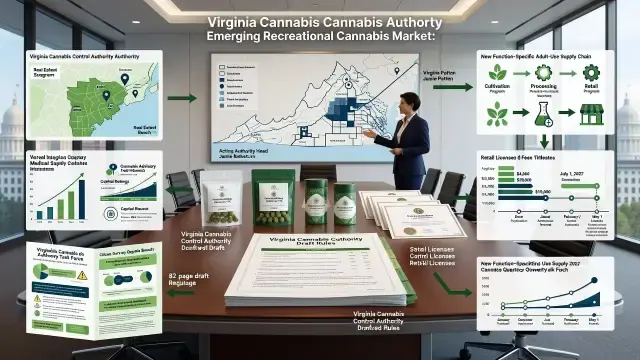
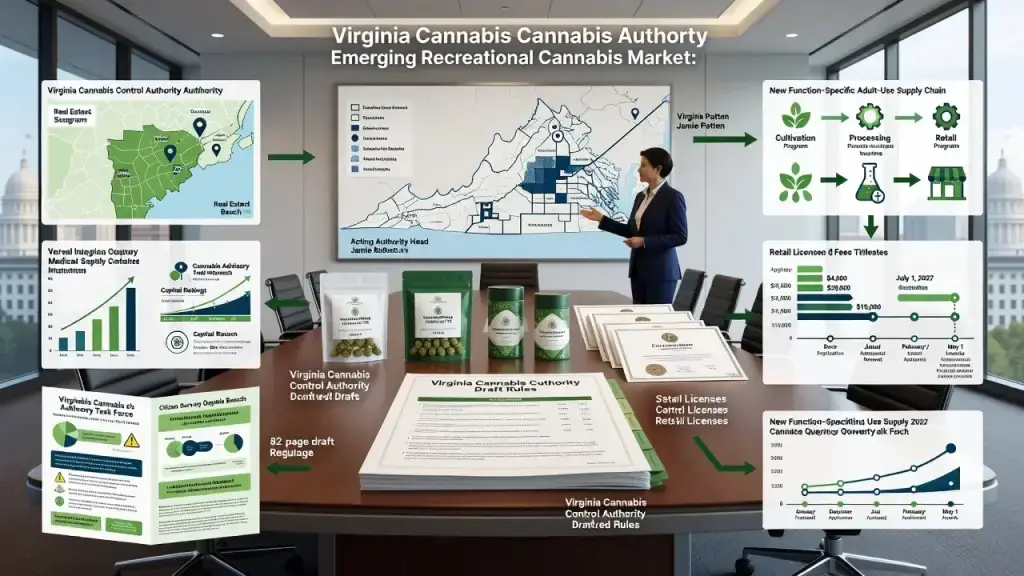
Virginia has put its first detailed blueprint for a recreational cannabis market on paper, and the 82-page draft from the Virginia Cannabis Control Authority gives prospective operators something they've lacked for years: specifics. The framework covers licensing categories, possession limits, packaging standards, and the fee schedule businesses will need to budget for - all ahead of sales expected to begin July 1, 2027.
For an industry that has spent years watching neighboring states figure out adult-use retail through trial and error, Virginia's approach reads as deliberate. Acting authority head Jamie Patten framed the goal as balancing public health oversight with clear direction for applicants. That's a reasonable ambition. Whether the execution holds up once applications actually open is the question operators should be tracking.
What the Draft Actually Locks Down
The consumer-facing rules are fairly standard for adult-use markets: 21 and older to purchase, no medical certification required, two-ounce possession limits, and a 100-milligram THC cap per package with individual servings capped at 10 milligrams. These potency and packaging limits matter beyond consumer safety - they shape SKU design, compliant packaging costs, and how brands structure their product lines before a single store opens.
On the business side, standard retail licenses are capped at 350 statewide, a number set by statute rather than the authority itself. That cap excludes microbusinesses and qualifying medical operators, which means the real ceiling on retail storefronts is still somewhat fluid. Patten said the authority is still working through license caps for other business categories, with clarity expected in coming weeks. Operators evaluating real estate or raising capital right now are essentially working off a partial picture.
- Application fee for standalone retail: $4,000
- Initial authorization fee: $20,000
- Annual renewal fee: $15,000
Those figures are draft numbers, not final ones, and could shift before adoption. Even so, they give prospective licensees a planning baseline - and a reminder that licensing costs are just the entry fee before build-out, compliance infrastructure, and staffing come into play.
A Different Supply Chain Than Medical
Here's the structural shift worth flagging: Virginia's medical program runs on vertical integration, with licensed operators handling cultivation, processing, and dispensary sales within assigned health service areas. The adult-use market won't work that way. Licenses will be function-specific - cultivation, processing, or retail - unless a business qualifies as a microbusiness able to operate across multiple stages of the supply chain.
That separation changes the competitive math. A cultivator won't automatically control retail shelf space, and a retailer won't necessarily have an in-house grow to lean on. Wholesale relationships, transportation logistics, and delivery manifests become more consequential than they are under the current medical model. Existing medical dispensaries get a bridge into the new market - they'll be permitted to sell both medical and recreational products - but standalone recreational retailers won't be authorized to sell medical cannabis. Product testing and safety standards are expected to apply uniformly across both channels.
Zoning Will Decide Who Actually Opens
State licensing is only half the equation. Local zoning will determine where licensed businesses can physically locate, and that's playing out now in cities like Virginia Beach, where officials are surveying residents on buffer distances between cannabis businesses and their proximity to schools and other sensitive areas. The questionnaire deadline is Oct. 20.
Tamara Netzel, a citizen member of the city's Cannabis Advisory Task Force, made a point worth sitting with: overly restrictive zoning doesn't eliminate demand, it just redirects it toward the illicit market. That's not a new argument in regulated cannabis - alcohol retail went through versions of the same fight decades ago - but it's one local officials tend to underweight until licensed stores struggle to find compliant locations.
For operators, the practical takeaway is straightforward: don't wait for applications to open before scouting sites. Patten urged prospective businesses to study location requirements now and start building relationships with local governments early, since zoning approval and state licensure both have to align before a store can open its doors.
The Timeline Ahead
Regulations are moving through review, including input from the Cannabis Public Health Advisory Council, with finalization targeted for December and publication in January. Applications for certain license types are expected to open Feb. 1, 2027, with initial licenses awarded by May 1 and sales beginning that July. Patten was careful to note not every licensed business will be ready to open on day one - a realistic caveat, given how often construction delays, staffing, and compliance system setup push back launch dates in other state markets.