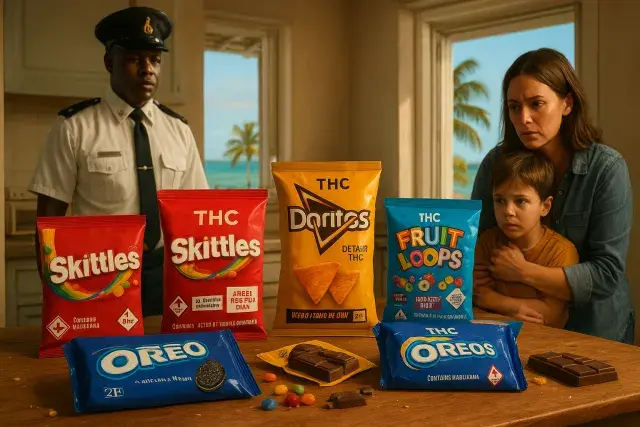
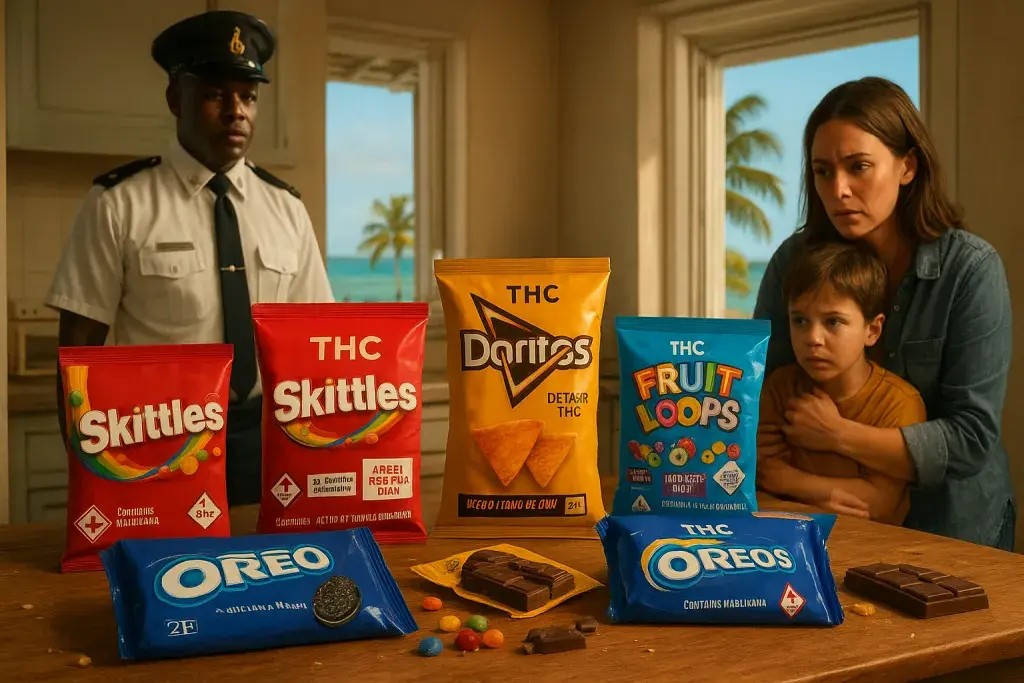
The Royal Bahamas Police Force has issued a public warning after marijuana-infused edible products - packaged to mimic well-known candies, chips, cereals, and cookies - were found circulating in Nassau. The concern is straightforward and serious: children cannot reasonably be expected to distinguish a THC-infused product from an ordinary snack when the packaging is designed to blur that line. For anyone connected to the licensed cannabis industry, this is exactly the kind of incident that fuels regulatory tightening and public backlash against compliant operators who had nothing to do with it.
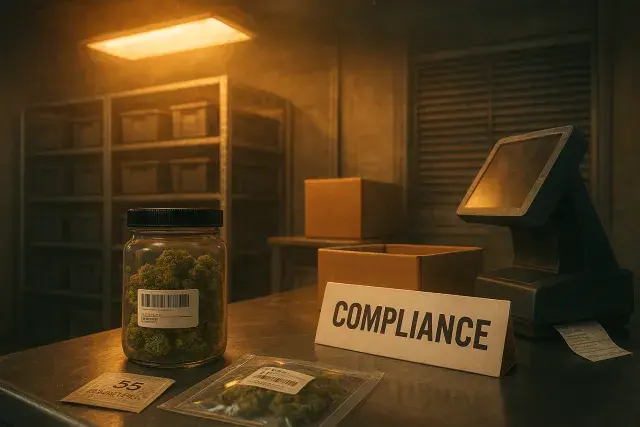
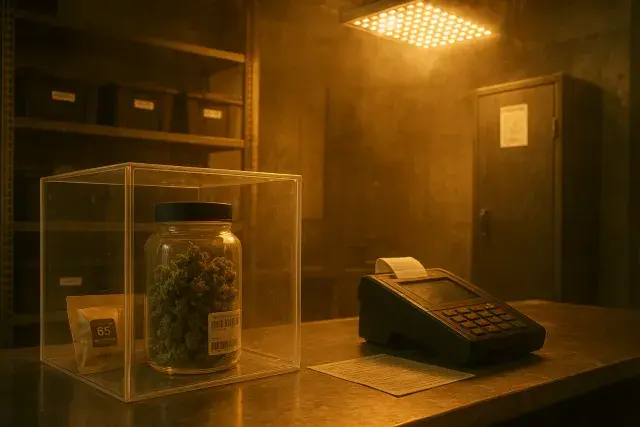
These products are not coming through licensed dispensary channels with verified lab results, compliant labeling, and child-resistant packaging - they are illicit goods moving outside any regulated framework entirely. The distinction matters enormously. In licensed adult-use markets across North America, compliant packaging rules exist precisely to prevent this outcome: mandated THC symbols, plain or opaque packaging, child-resistant closures, potency disclosures per serving, and strict prohibitions on packaging that resembles products marketed to minors. Operators and brands looking to understand what rigorous, market-specific compliance infrastructure looks like in a functioning regulated environment can learn more about how licensed retail programs approach these standards at the state level. The Bahamas has no such regulated adult-use framework in place, which means there is no licensed supply chain, no seed-to-sale tracking, no certificate of analysis, and no enforcement mechanism tied to product standards.
What makes this category of illicit product particularly dangerous is the deliberate mimicry. Packaging that copies the colors, fonts, and logos of recognizable snack brands is not accidental - it is a design choice. In regulated markets, that practice is explicitly banned. Most U.S. state cannabis regulators prohibit packaging that imitates non-cannabis consumer brands, and several have gone further, restricting cartoon imagery, bright colors, and any design element that could appeal to children. The Bahamian situation illustrates what the market looks like without those guardrails.
What Parents and Guardians Are Being Told to Watch For
The Royal Bahamas Police Force outlined specific indicators that a product may contain cannabis. These mirror, almost exactly, the disclosure requirements that licensed markets mandate by law - which is useful context for understanding why those rules exist in the first place.
- THC or cannabis labeling, including terms such as "THC," "Delta-9 THC," "cannabis," "marijuana," or "infused"
- Potency information indicating the amount of THC per serving or per package
- Cannabis warning symbols or age-restriction statements such as "21+" or "For Adult Use Only"
- Child safety warnings and child-resistant packaging indicators
- Packaging that imitates the appearance, colors, or logos of popular snack brands
The irony is pointed: in a licensed retail environment, the first four indicators are compliance requirements. Here, they function as consumer safety warnings in an unregulated black market. Police advise anyone who finds such a product to secure it immediately, keep children away from it, and contact emergency services. If a child is believed to have consumed a cannabis-infused product, the guidance is to seek medical attention immediately and call 911 or 919.
The Broader Industry Implication
For licensed cannabis operators, incidents like this are a reputational and regulatory liability - even when the products involved have no connection to a licensed supply chain. Public concern about children accessing cannabis edibles has historically accelerated packaging regulation, fueled calls for stricter advertising rules, and given critics of cannabis legalization a concrete example to point to. That is not speculation; it is a pattern visible across multiple regulated markets over the past decade.
The thing is, compliant operators already carry the cost of rigorous packaging standards - child-resistant closures, opaque materials, mandated warning language, SKU-level labeling requirements - and they do so because those standards serve a genuine purpose. What Nassau is confronting is the consequence of an unregulated market operating without any of those friction points. No dispensary point-of-sale system requiring age verification. No compliance log. No COA attached to a product batch. No wholesale menu with lab-tested potency disclosures. Just a product in deceptive packaging moving through informal channels with no accountability attached.
The licensed cannabis industry's strongest argument for regulation has always been that a controlled, transparent supply chain produces safer outcomes than prohibition. The situation in the Bahamas does not refute that argument - it reinforces it.