The Drug Enforcement Administration is moving toward formal hearings on a proposal to reclassify marijuana from Schedule I to Schedule III of the Controlled Substances Act - a shift that would carry federal weight few cannabis policy changes have ever carried before. If approved, the reclassification would amount to a federal determination that all cannabis products, including flower, pre-rolls, vape cartridges, concentrates, edibles, and tinctures, have a currently accepted medical use. For the cannabis industry, for regulators, and for public health, the stakes in that determination are not abstract.
Operators running a dispensary pos system Arizona - or any state-legal market - already understand that the regulatory floor beneath them shifts constantly. Rescheduling would not automatically federally legalize commercial cannabis sales, nor would it resolve the tax burden imposed by IRS Section 280E, which denies standard business deductions to companies trafficking Schedule I or II controlled substances. Schedule III status would change that calculus on 280E, potentially offering meaningful relief to licensed retailers who have operated for years without the ability to deduct ordinary business expenses. That alone would reshape dispensary economics in adult-use and medical markets alike. But the broader question the DEA hearings must confront has nothing to do with tax codes or retail margins. It is this: does the scientific record actually support calling crude cannabis a medicine?
What Reclassification Would Actually Assert
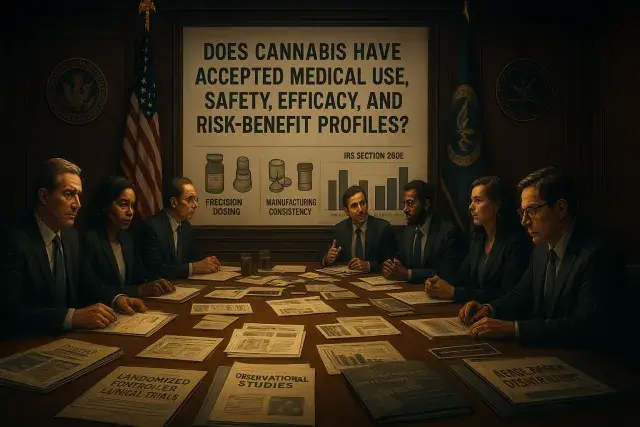
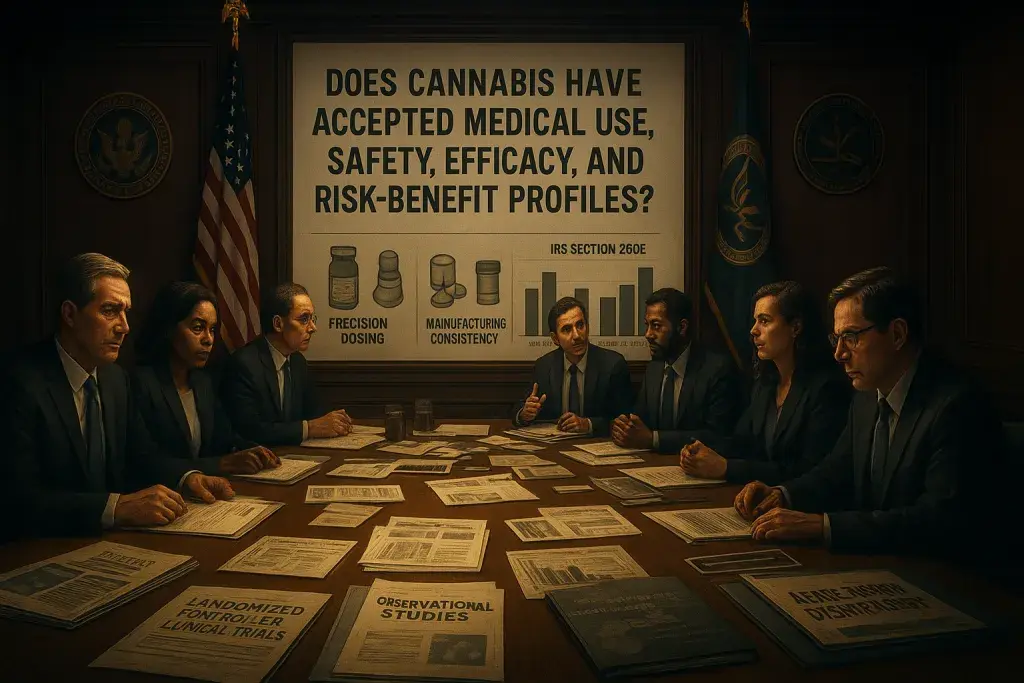
Here is the catch. Rescheduling marijuana to Schedule III is not merely an administrative adjustment. Under the Controlled Substances Act's own framework, Schedule III classification requires a finding that a substance has a currently accepted medical use in the United States. That is a scientific and regulatory standard - not a political one. Drugs earn that designation by demonstrating safety, efficacy, manufacturing consistency, known dosing, and an acceptable risk-benefit profile through rigorous clinical evaluation. Three cannabinoid-derived compounds have achieved FDA approval through that process. The broader cannabis flower and its derivative products sold on dispensary shelves have not.
The Department of Health and Human Services has pointed to the existence of state medical marijuana programs as evidence of broad medical acceptance. That argument deserves scrutiny. As the context provided to this editorial makes clear, data from Colorado shows a stark concentration: a tiny fraction of licensed healthcare practitioners with prescribing authority accounted for the overwhelming majority of medical marijuana certifications, while the vast majority of eligible practitioners issued none at all. That pattern does not describe mainstream clinical adoption. It describes a narrow certification infrastructure built around a specific subset of providers operating within a specific legal framework. Treating that as proof of widespread medical acceptance is a significant interpretive stretch.
The Research Argument Has Limits Too
Proponents of rescheduling argue that moving marijuana to Schedule III would reduce barriers to research - and there is something to that point. Schedule I classification does impose procedural constraints on researchers. President Trump's executive order directing the attorney general to complete the rescheduling process was framed around expanding medical marijuana and cannabidiol research, which signals that research access is a genuine policy concern. Fair enough. But the standard sequence in drug development runs in one direction: research demonstrating safety and efficacy precedes classification as a medicine, not the other way around. Rescheduling first and researching second inverts that logic entirely.
What's striking here is the scale of cannabis research that has already occurred without rescheduling. Thousands of scientific papers appear annually, and the NIH database indexes tens of thousands of cannabis publications. The research base is not small. The issue is not volume - it is the quality and type of evidence that would meet FDA standards for approving a drug product. Randomized, controlled clinical trials of crude cannabis products meeting pharmaceutical-grade consistency requirements are not the same as observational studies or survey-based research, however numerous the latter may be.
What Operators and the Industry Should Watch
For dispensary operators, multi-state operators, and cannabis brands, the rescheduling hearings represent both an opportunity and a reputational exposure point. The 280E relief alone would be operationally significant - potentially allowing licensed retailers to deduct cost of goods, payroll, rent, and other ordinary business expenses that have been denied under current law. That changes store-level profitability in ways that no price compression or wholesale pricing adjustment has been able to fully offset.
But the industry should be clear-eyed about something else. A federal determination that all marijuana products have accepted medical use - without the clinical evidence base to support that claim - creates a public communication problem that responsible operators will have to manage. Consumers, including parents of teenagers, may read rescheduling as a government endorsement of cannabis as validated medicine. The data on adolescent brain development tells a more complicated story, and any operator committed to responsible retailing and age-restriction compliance understands the stakes of that misread. Compliant packaging, rigorous age verification at point-of-sale, and accurate consumer communication are not just regulatory requirements. They become more critical, not less, if rescheduling blurs the line between approved pharmaceuticals and state-licensed retail products.
The DEA hearings are where the scientific record gets tested. The cannabis industry's long-term credibility may depend on whether that test is taken seriously.