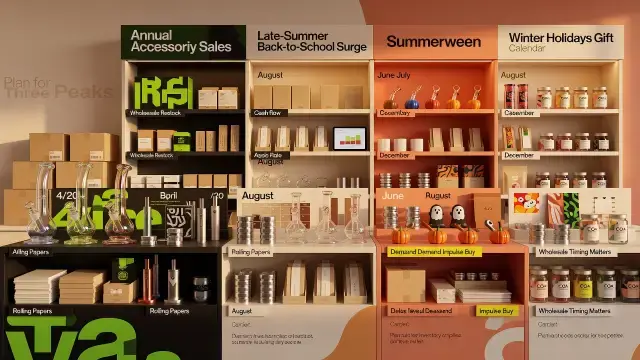
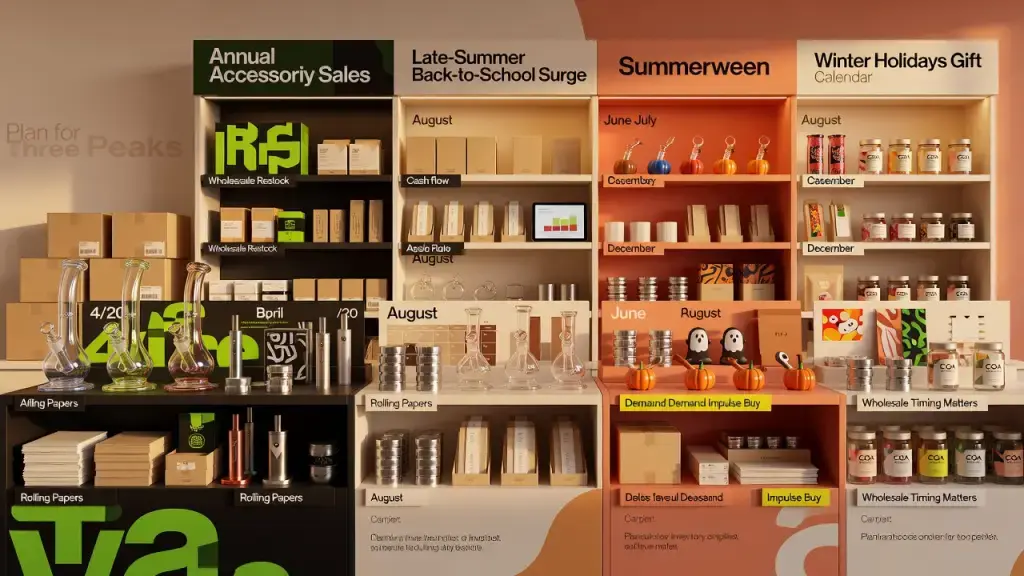
Wholesale accessory orders at dispensaries don't follow the calendar most retail categories live by. December gets the headlines, but it isn't necessarily the biggest pull on inventory. Distributors who track ordering patterns across the year see three distinct peaks - 4/20, late summer, and the winter holidays - and the traditional gift season often comes in third.
That matters for store buyers, because shelf space, cash flow, and staff time are finite. A seasonal plan built only around December leaves real volume on the table in April and August.
4/20 Is the Obvious Peak, But Prep Starts Earlier Than You Think
Nobody in the industry needs convincing that 4/20 drives traffic. It's the one date every dispensary builds promotions, loyalty pushes, and in-store events around. Accessories ride along naturally - a customer buying flower may also grab papers, a grinder, or a new piece of glass, and shoppers who've been eyeing a device for months often pull the trigger that week.
The catch is timing. Capturing that demand requires product on the shelf before the rush, not during it. Wholesale orders for the holiday typically land weeks ahead, which means store-level reorder planning needs to start earlier than most buyers assume. A compliant packaging run, a restock from a distributor, or a late shipment can quietly cost a retailer the week's biggest selling window.
The Back-to-School Surge Hiding in Plain Sight
Late summer is the less obvious pattern, but it's a real one. Wholesale accessory ordering in August has, in some years, rivaled the 4/20 buildup - a cycle that has nothing to do with any official cannabis holiday and everything to do with routine. Adults heading back to school or settling in from travel may be replacing worn gear or restocking as schedules shift.
That's a plausible explanation, not a confirmed one. No one is tracking enrollment data against point-of-sale receipts. What retailers can do is pull their own prior-year numbers for July and August, identify which price points and categories moved, and make sure those SKUs are visible before the season arrives rather than after it's already underway. Grinders, rolling papers, and affordable glass tend to be the workhorses here, not the premium pieces.
Halloween Moves Early, and Inventory Discipline Matters
Seasonal design sells, and in this category, Halloween-themed accessories often generate more excitement at the shelf than Christmas-themed merchandise does. That doesn't mean Halloween produces more total revenue; it means novelty and impulse purchasing behave differently than gift purchasing. A pumpkin-shaped pipe doesn't need a recipient or an occasion. The customer just likes it.
The selling window has also been creeping earlier, with "Summerween" merchandising pulling demand into June and July well ahead of the usual October push. For buyers, that's an opportunity with strings attached: test quantities first, watch sell-through closely, and reorder the winners. A seasonal display that sits half-full by November isn't a merchandising win - it's tied-up cash and dead shelf space.
Winter Holidays Deserve a Plan, Not an Assumption
Gift-giving changes the purchase calculus. Buying an accessory for yourself is a simple decision; buying one for someone else to unwrap requires knowing their habits, preferences, and how openly they use cannabis at all. Some customers keep that private, which makes accessories a less automatic holiday purchase than retailers often expect.
There's also a wholesale-versus-retail timing gap worth flagging for operators: dispensaries frequently place holiday orders in October or November, so a quieter December on the wholesale side doesn't necessarily signal a quiet December at the register. Retailers should compare their own consumer sales data against purchasing history before drawing conclusions about demand.
The practical fix is merchandising that removes friction - a dependable grinder, a clearly priced bundle, a well-labeled piece of glass with a visible COA reference where applicable - paired with staff who can answer basic questions about size, material, and use without overstepping into anything resembling a health claim. Retailers operating under state age-verification and compliant-packaging rules should keep gift-season displays consistent with those same standards; seasonal enthusiasm doesn't suspend the regulatory basics.
None of this displaces December. It just means the calendar has more than one peak, and the operators who plan inventory, cash flow, and staffing around all three tend to outperform the ones waiting for Santa to do the work alone.