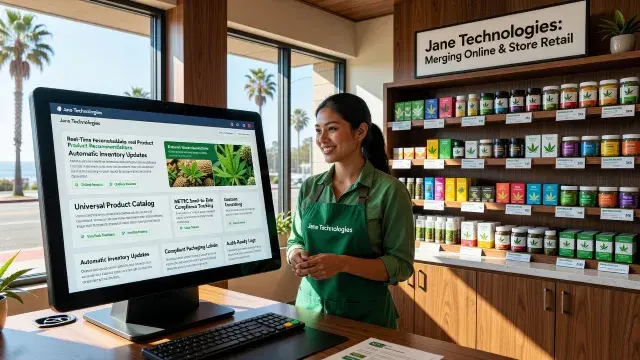
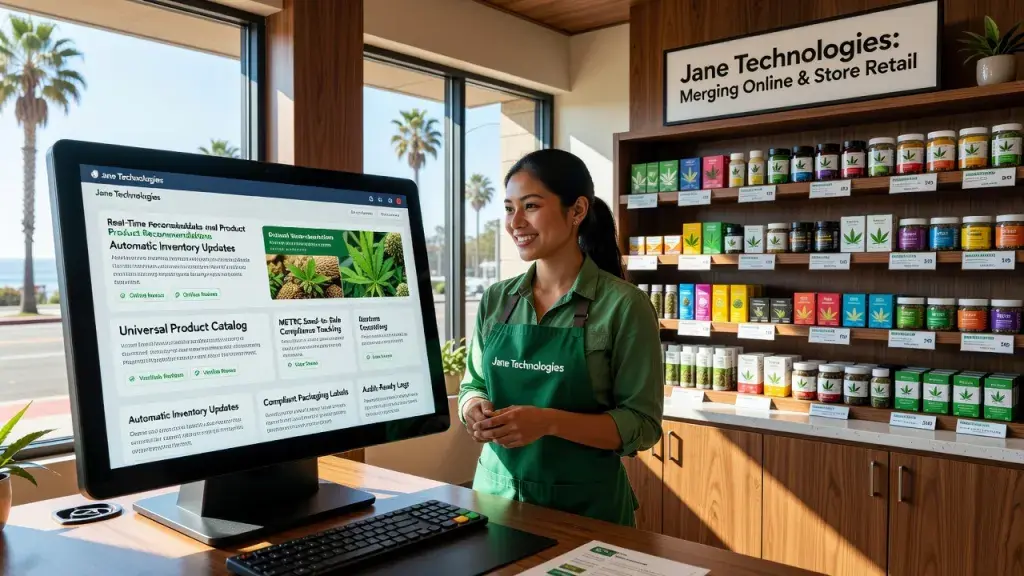
Jane Technologies has announced a forthcoming point-of-sale platform designed to link its online cannabis marketplace with the physical dispensary counter. The Santa Cruz, California company, known for powering e-commerce menus for retailers across legal markets, says the new system is built to carry personalization features that currently exist only online into the budroom itself.
Why POS Matters More in Cannabis Than Most Retail Sectors
Point-of-sale infrastructure in cannabis does more work than a typical retail checkout system. It has to reconcile real-time inventory with state seed-to-sale tracking systems like METRC, manage compliant packaging and labeling at the transaction level, and produce the compliance logs regulators expect during audits. A POS failure or data mismatch isn't just a customer-service problem - it can trigger a compliance violation. That's a different risk profile than what a grocery or apparel retailer faces, and it's part of why cannabis-specific POS vendors have carved out a durable niche rather than getting absorbed by generic retail software.
Jane's pitch here is that most dispensary POS systems handle the regulatory side adequately but do little to connect what a customer already explored online - verified reviews, product details, personalized picks - with what a budtender sees at the counter. The Jane POS is positioned to close that gap by pulling the company's existing e-commerce data and ad infrastructure directly into the in-store interaction.
Catalog Management and the Wholesale Bottleneck
One operational pain point the announcement addresses directly: catalog and inventory ingestion. Retailers switching POS providers often lose weeks reconciling product data, chasing brands for updated assets, or manually entering new SKUs. Jane says its Universal Product Catalog, which the company describes as covering more than 1.5 million products from thousands of brands, updates automatically when brands launch new items, and that this same dataset can populate a new POS installation in hours rather than weeks.
For multi-store operators, that kind of catalog automation has real financial weight. Inventory shrinkage, mispriced SKUs, and stale product listings all cost money and invite compliance scrutiny. If wholesale orders can ingest at scale against a standardized catalog, purchasing teams spend less time on data entry and more time managing margin, a persistent concern in a sector still operating under Section 280E tax restrictions that limit standard business deductions.
Open Infrastructure and the Omnichannel Bet
Jane frames the POS as an open system, meaning retailers can integrate third-party software rather than being locked into a single vendor's full stack. That's a meaningful distinction in a market where operators have grown wary of closed platforms that limit flexibility as compliance requirements shift state by state. The company also emphasizes combined analytics - online and in-store data under one dataset - which, in theory, gives retailers a fuller picture of purchasing behavior across channels rather than two disconnected pools of information.
Here's the catch worth watching: personalization engines and in-store kiosks raise questions that regulators care about, particularly around age verification, data handling, and marketing restrictions tied to cannabis advertising rules, which vary significantly by state. A system that recommends products based on past online behavior has to be built carefully enough to stay inside those lines. Jane's announcement doesn't detail how the POS handles those compliance layers specifically, but any retailer evaluating the platform will want clarity on that front before rollout.
What Operators Should Weigh Before Switching
- Compliance continuity: confirm integration with state seed-to-sale systems and that audit logs remain intact during migration.
- Data portability: understand what happens to historical sales and inventory data if the retailer later switches vendors again.
- Staff training: new recommendation tools require budtenders to use verified product information responsibly, not as a sales script.
- Marketing compliance: personalized in-store suggestions still fall under the same advertising and age-restriction rules as any other cannabis marketing channel.
Not quite a settled question yet is whether blending online personalization with in-store retail becomes standard practice across cannabis, as Jane predicts, or remains one vendor's differentiator. Either way, the operational stakes - inventory accuracy, tax exposure, and regulatory exposure - are the same ones dispensary operators have been managing since adult-use markets opened, just with a new layer of technology sitting on top.