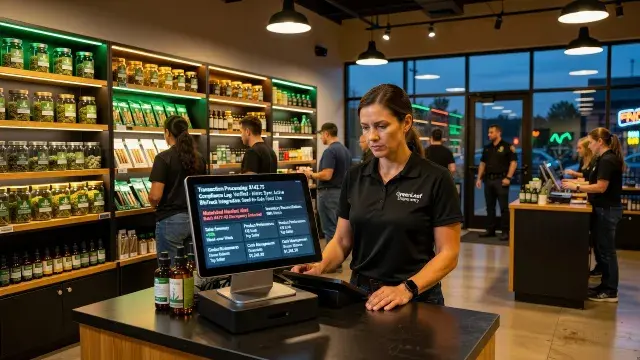
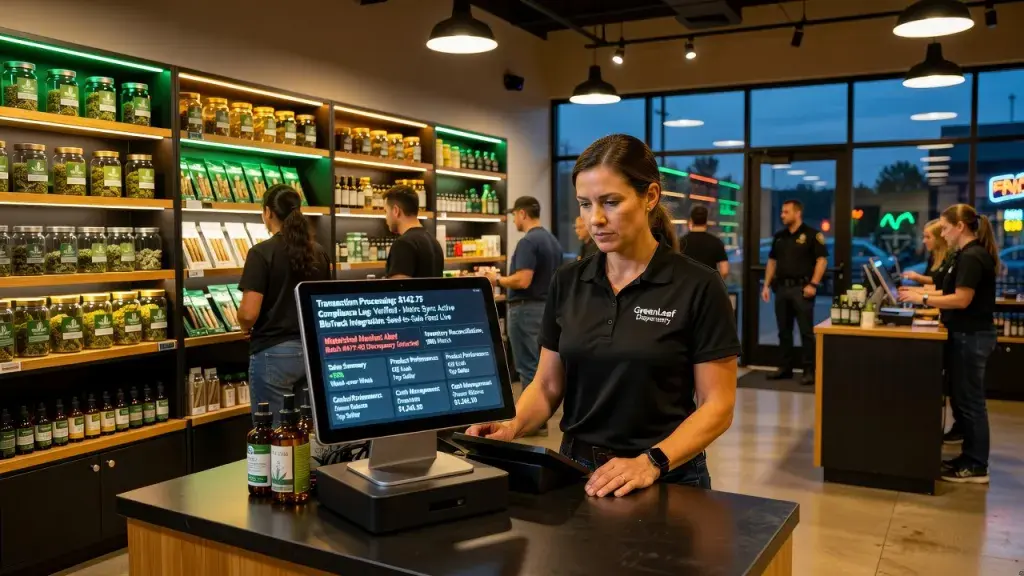
Point-of-sale software has quietly become the operational backbone of the cannabis retail sector, doing far more than ringing up sales. For dispensary owners and multistate operators alike, the system on the counter now determines whether a business stays compliant with state track-and-trace mandates, keeps inventory losses in check, and actually turns a profit under the weight of 280E tax exposure. As delivery and ecommerce grow, that dependence is only deepening.
Why POS Software Carries So Much Weight
A dispensary POS system does triple duty: it processes transactions, logs compliance data, and feeds inventory numbers into state seed-to-sale platforms like Metrc or BioTrack. Get any one of those wrong and the consequences aren't cosmetic - they can mean failed audits, mismatched manifests, or a compliance log that doesn't reconcile with what's actually on the shelf. That's the real reason operators obsess over uptime guarantees and integration lists rather than flashy dashboards.
The fractured nature of state cannabis law makes this harder than it sounds. A system built for one state's regulatory framework may need substantial retooling to serve another, which is exactly why vendors serving multistate operators emphasize built-in regulatory adaptability rather than one-size-fits-all design.
Inventory, Loyalty, and the Data Behind the Counter
Beyond compliance, POS platforms increasingly function as customer relationship engines. Loyalty programs, tiered pricing groups, and automated promotions have moved from nice-to-have to standard expectation, particularly for retailers competing against illicit-market pricing. Automated reporting - sales summaries, product performance, cash management - cuts down on the manual reconciliation that used to eat hours of a manager's week.
Inventory management deserves particular attention here. Dispensaries carrying thousands of SKUs across flower, edibles, and concentrates need systems that can audit stock quickly and flag discrepancies before they become shrinkage problems or, worse, compliance violations tied to missing product.
Payments Remain the Industry's Persistent Headache
Cash handling is still one of cannabis retail's biggest operational and safety liabilities, given federal banking restrictions that push many dispensaries toward cash-heavy operations. That's pushed some POS providers toward integrated digital payment options for online and delivery orders, aiming to reduce the safety risks and inefficiencies tied to cash-only transactions. Whether cashless solutions scale reliably across state lines remains an open question, since compliance and banking rules still vary significantly by jurisdiction.
Choosing a System Means Knowing the Business First
No single POS package fits every operation. A mom-and-pop shop opening its first location has different priorities - ease of onboarding, straightforward support, dependable compliance tracking - than a vertically integrated operator running cultivation, wholesale, and multiple retail doors simultaneously. Support hours, onboarding timelines, offline functionality during outages, and the depth of integrations with platforms like Weedmaps or Leafly all factor into that decision.
Operators evaluating vendors should treat the selection process the way they'd treat any major infrastructure investment: understand internal workflow needs first, then match features to those needs rather than chasing the longest feature list. In a sector still defining its regulatory footing, the POS system isn't just software - it's the record-keeping spine that keeps a licensed business licensed.