
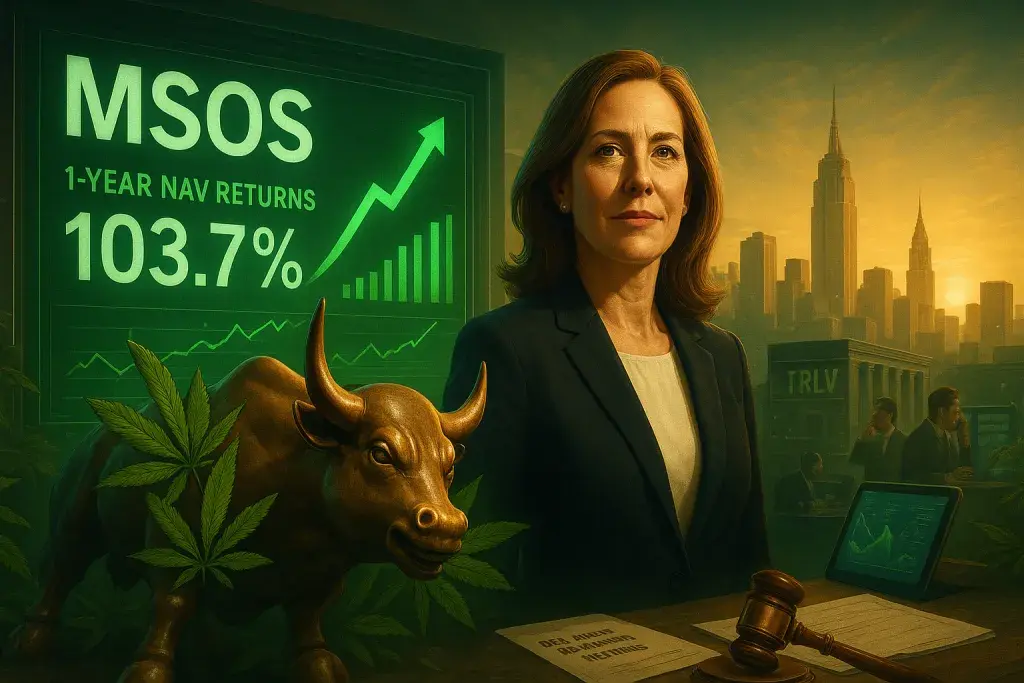
Cannabis stocks are having a moment few in the sector predicted a year ago. The AdvisorShares Pure US Cannabis ETF (MSOS) climbed to its highest levels of 2026, riding a wave of investor enthusiasm ahead of a June 29 DEA administrative hearing that could reshape how marijuana is classified under federal law. Trulieve Cannabis, the fund's largest holding, added momentum this week with a listing on the New York Stock Exchange under the ticker TRLV - a milestone that would have been unthinkable for a plant-touching operator just a few years back.
The numbers tell a story of sector-wide repricing rather than a single stock running hot. As of May 31, MSOS posted a 103.7% one-year NAV return, dwarfing the North American Marijuana Index's 36.9% gain and far outpacing the S&P 500's 29.8%. That kind of outperformance doesn't happen without a structural catalyst, and here it's rescheduling speculation doing the heavy lifting. For operators watching capital markets from the retail floor, the read-through matters: as multi-state operators gain access to senior exchanges and cheaper capital, the operational side of the business - from wholesale pricing to store-level technology like a cannabis POS for Delaware dispensaries - starts to look less like a workaround industry and more like conventional retail with conventional financing options. cannabis POS for Delaware dispensaries
Trulieve's exchange listing wasn't just a symbolic win. The company restructured itself, separating medical cannabis operations from adult-use businesses specifically to satisfy exchange listing standards, a move CEO Kim Rivers called a "historic milestone." That kind of corporate surgery isn't cheap or simple; it requires legal restructuring, updated compliance frameworks, and often renegotiated banking relationships. But it opens doors that have been closed to federally illegal businesses for over a decade - institutional ownership, index inclusion, and analyst coverage from firms willing to publish price targets rather than disclaimers.
The Rescheduling Mechanics Behind the Rally
The excitement traces back to April, when Acting Attorney General Todd Blanche moved state-licensed medical marijuana products into Schedule III and set in motion a broader rescheduling review. That single regulatory action eliminated the harshest tax penalty cannabis operators have lived under for years: Section 280E of the federal tax code, which barred licensed cannabis businesses from deducting ordinary expenses like payroll, rent, and interest because their product remained a Schedule I substance. Removing that penalty for medical operators is not a minor accounting tweak - it changes the entire cash-flow calculus for companies that have spent years operating profitably on paper while drowning under effective tax rates that no other industry faces.
The June 29 hearing will determine whether that logic extends further, to adult-use cannabis broadly. Proceedings are expected to run through mid-July, and the outcome will shape everything from bank lending appetite to whether multi-state operators can finally access the kind of debt financing that ordinary retailers take for granted. Trump's nomination of Blanche to serve as permanent attorney general, announced this week, only reinforced investor confidence that the regulatory direction won't reverse course.
Uplisting Fever and What It Means for the Supply Chain
Roth Capital called the rescheduling order "extremely favorable" for the sector, and the ripple effects are already showing up in financing deals. Cresco Labs secured a $50 million revolving credit facility from Needham Bank this week - the kind of non-dilutive capital that lets a company fund acquisitions without diluting shareholders, and CEO Charlie Bachtell framed it explicitly as groundwork for a future uplisting. That's the pattern to watch: capital access improving before formal rescheduling is finalized, as lenders and exchanges position ahead of the regulatory outcome rather than waiting for it.
For dispensary operators and wholesalers further down the supply chain, easier capital access at the multi-state operator level eventually filters down - better-financed suppliers, more stable wholesale menus, and less pressure on compliant packaging vendors and lab-testing partners who've absorbed thin margins for years. Retail sentiment on platforms like Stocktwits reflects the same bullishness reflected in trading volumes, though enthusiasm among retail traders is not a substitute for regulatory certainty. The hearing outcome, not investor mood, will decide whether this rally has staying power or proves to be another false dawn in a sector that has seen plenty.